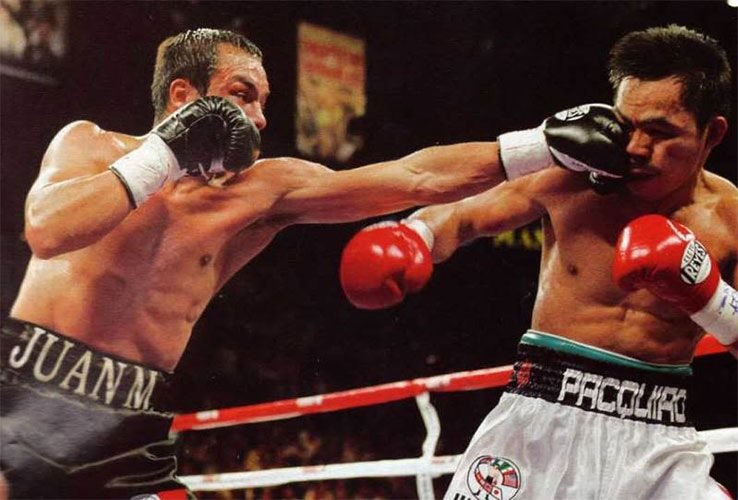
Why the jab is considered the foundation of boxing
The jab is a straight punch with the front hand that sets the pace, controls distance, and opens the way for powerful combinations. This technique is called the “calling card” of a professional because without it, it is impossible to build a fighting strategy. With the jab, a boxer controls the space, assesses the opponent’s reaction, and prepares the ground for decisive attacks, as can be done at Kinghills Casino.
The advantage of the jab is its versatility. It is equally effective in both attack and defense. With its help, you can contain the opponent’s pressure, interrupt combinations, and keep a safe distance. Despite its apparent simplicity, this punch requires accuracy, speed, and proper technique.
The jab is not just a touch, but a tool that sets the rhythm of the entire fight. Its quality determines whether the boxer will be able to control the course of the fight. Therefore, mastering the correct execution of this punch is the first step to reaching a professional level.
Basic principles of proper jab execution
For the punch to be effective, it is important to observe the technique of body movement and coordination of all elements. Errors in stance, balance, or hand position reduce speed and power.
1. Starting position
It all starts with the correct stance. The feet are shoulder-width apart, the front foot is pointed forward, and the back foot is slightly angled. The knees are slightly bent for stability. Body weight is distributed evenly, allowing for easy movement forward or backward.
2. Arm movement
When striking, the front arm is straightened in a straight line toward the target. The fist turns palm down at the moment of contact. It is important not to lower the elbow or open the shoulder in advance, otherwise the opponent will see the strike.
3. Torso work
The power of the jab comes not only from the arm, but also from the rotation of the torso and the movement of the supporting leg. A slight push with the back foot provides momentum, and the hips and shoulders are engaged for accurate direction.
4. Return to defense
After contact, the arms immediately return to their starting position. This protects the face from counterattacks. Each movement should be short and elastic, without “lapses.”
Common mistakes and how to avoid them
Even experienced athletes sometimes make mistakes when performing a jab. Understanding common mistakes helps to correct your technique more quickly.
The most common problems
- Lowering your hand after a strike. This creates a gap in your defense.
- Leaning your torso forward. You lose your balance and your reaction time slows down.
- Swinging too wide. This makes the punch predictable.
- Lack of body rotation. This reduces power and speed.
To avoid these mistakes, it is important to practice the movement in front of a mirror or under the supervision of a coach. By gradually honing every detail, you can achieve accuracy and natural execution.
Helpful tips
- Work on your foot and hand coordination.
- Watch your head position: chin slightly down, shoulder covering your jaw.
- Don’t just punch with your arm — engage your legs and torso.
- After a series of jabs, always change your rhythm so you don’t become predictable.
How to train your jab: exercises and techniques
Regular training allows you to develop not only strength but also a sense of distance. A jab is a strike of precision, not brute force.
1. Practicing on the bag
A punching bag helps you feel the moment of contact. It is important not to hit it with force, but to emphasize speed and sharpness. Training should be done at a calm pace, with control of breathing and rhythm.
2. Shadow boxing
Working in front of a mirror allows you to see mistakes in your stance and hand movements. This helps to correct the position of your elbows, head, and torso.
3. Jump rope and legs
Fast legs are the key to an effective jab. Jumping rope develops coordination, agility, and reaction time.
4. Working with a partner
Sparring or practicing with a trainer teaches you to control distance. Punches should be accurate, with constant changes in rhythm and direction.
5. Combined exercises
Combine the jab with other elements: dodges, steps, feints. This develops dynamics and helps you adapt to any opponent.
Types of jabs and their application
There are several types of jabs, each of which serves its own purpose. The ability to combine them makes boxing technique unpredictable.
The main types are:
- Classic jab. A quick punch to control distance.
- Hard (power) jab. Used to contain the opponent’s pressure.
- Double jab. Two quick punches in a row, opening the way for the right hand.
- Counter jab. Used for a counterattack when the opponent is advancing.
- Jab with a step to the side. Helps to change the angle of attack and avoid a counterpunch.
Each option requires good timing. The more varied the arsenal, the more difficult it is to predict the fighter’s actions.
The tactical significance of the jab in a fight
In addition to technique, it is important to understand the strategic role of this punch. The jab serves not only to inflict damage, but also to build the entire structure of the fight.
Why is it needed
- Distance control. Allows you to keep your opponent at a safe distance.
- Testing reactions. Helps to determine the rhythm and defense of your opponent.
- Preparing combinations. Creates space for more powerful attacks.
- Disrupting the tempo. An unexpected jab can stop your opponent’s momentum.
Experienced boxers use this technique as a tool to control the ring. Thanks to constant pressure with short punches, your opponent loses the initiative and is forced to react rather than attack.
Conclusion: the jab is the foundation of skill
Mastering the jab is the foundation of boxing. It teaches discipline, coordination, and strategic thinking. Without precise work with the front hand, it is impossible to build a defense or develop an attack.
Regular training, attention to detail, and proper technique turn a simple punch into a powerful weapon. It is important to remember that the power of the jab lies not in brute force, but in accuracy and control.
Every great boxer started with it, honing their movements to perfection. The better the jab, the higher the level of the fighter.